
Training

Effective environmental management relies on people understanding their responsibilities, recognising environmental risks and knowing what actions are required to achieve compliance. Practical, targeted training can significantly improve environmental performance while reducing the risk of environmental incidents and non-compliance.


Dynamic Environmental Services develops and delivers site-specific environmental training for construction, operational and industrial projects throughout Australia. Our training is tailored to the site, project, workforce and environmental risks involved, ensuring personnel receive practical information that is relevant to their role and day-to-day activities.


Our training services include:

  • Site-specific environmental inductions
  • Environmental awareness training
  • Environmental responsibilities and compliance obligations
  • Environmental risk identification and management
  • Environmental inspections, monitoring and sampling
  • Erosion and sediment control training
  • Weed awareness
  • Incident response and environmental reporting
  • Environmental management plan implementation
  • Environmental toolbox talks and pre-start briefings
  • Project-specific environmental topics and requirements


Our team has extensive experience supporting active construction and operational sites and understands how to communicate environmental requirements to project managers, environmental personnel, supervisors and operators in a practical and engaging manner. This practical experience allows us to deliver training that focuses on real-world application rather than theory alone.

All training packages are tailored to the specific site, project and audience.


Whether the objective is delivering a site induction, rolling out a new management plan, educating personnel on environmental risks, supporting a high-risk activity through toolbox talks, or addressing a specific compliance requirement, we work closely with clients to develop training that aligns with their goals and operational requirements.


Training can be delivered face-to-face, virtually or as part of a project induction program. Supporting materials, toolbox talks and awareness resources can also be developed to assist with ongoing education and reinforcement of key environmental requirements throughout the life of a project.


Our goal is simple: provide practical, engaging and relevant training that helps personnel understand environmental requirements and apply them effectively in the field.
How can we help?

Related Projects and Articles
By Lisel Dingley June 12, 2026
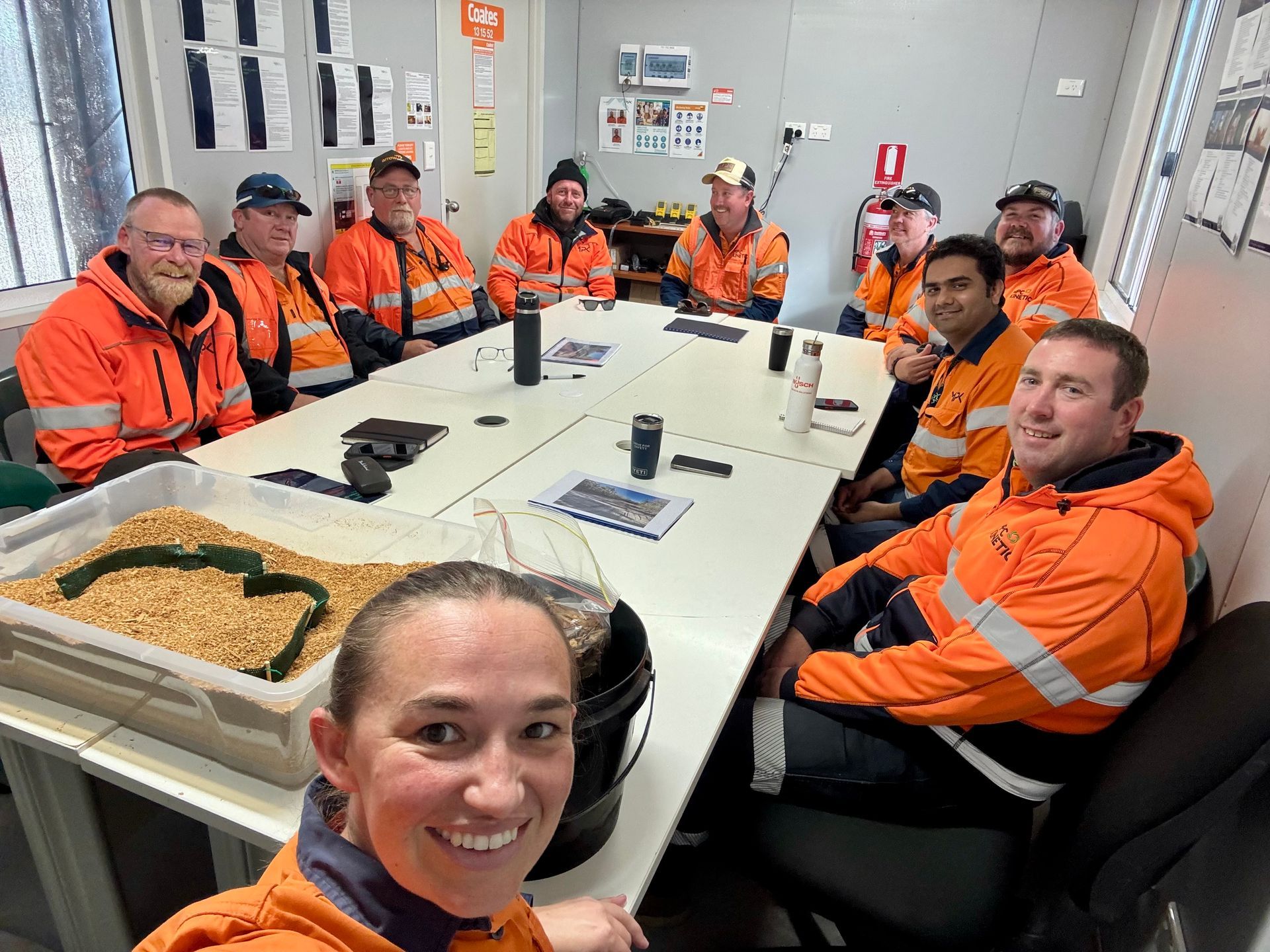
Linear infrastructure projects present unique erosion and sediment control challenges. Construction activities often extend across hundreds of kilometres, traversing multiple soil types, land uses, drainage features and landholder properties. Success depends not only on having a compliant Erosion and Sediment Control Plan (ESCP), but on ensuring the people delivering the works understand why controls are required, how they function and how they can be practically implemented in the field. Dynamic Environmental Services was engaged to develop and deliver a bespoke erosion and sediment control training program for personnel involved in the construction of linear gas infrastructure. The program was specifically tailored to the client's construction methodologies, project constraints and environmental risks, ensuring the content was directly relevant to the work being undertaken on site. Rather than relying on generic training materials, the course was built around real project examples, site photographs and common challenges encountered during construction. Photographs from the client's own projects were used to demonstrate both effective and ineffective erosion and sediment control practices, encouraging practical discussion around how outcomes could be improved. To further enhance understanding, Dynamic developed a series of scaled physical models and demonstration props which were used throughout the training to illustrate key erosion and sediment control concepts. These models allowed participants to visualise how water moves across disturbed land, how erosion occurs and how different control measures function in practice. The training was delivered to a diverse audience including environmental professionals, civil supervisors and plant operators. This multidisciplinary approach helped establish a common understanding of erosion and sediment control requirements across all levels of the project team, improving communication and consistency in the field. Our services included: Development of a bespoke erosion and sediment control training program Preparation of project-specific training materials Development of scaled demonstration models and training props Review and incorporation of project-specific photographs and case studies Training delivery to environmental personnel, supervisors and operators Practical demonstrations of erosion and sediment control principles Guidance on linear infrastructure construction challenges Discussion of constructability considerations and field constraints Ongoing technical support and advice The training focused on practical application rather than theory alone. Particular attention was given to understanding clean and dirty water management, diversion banks, whoa boys, sediment traps, sediment fencing, stockpile management, waterway crossings and the relationship between construction activities and environmental outcomes. Participants were encouraged to discuss site-specific challenges and identify practical solutions that could be implemented during construction. Outcomes Increased understanding of erosion and sediment control principles across project teams Improved consistency in the implementation of erosion and sediment control measures Enhanced communication between environmental staff, supervisors and operators Greater awareness of environmental risks associated with linear infrastructure construction Practical knowledge directly applicable to field activities Improved confidence in interpreting and implementing ESCP requirements Increased capability within the workforce to identify and address erosion and sediment risks Training tailored to the client's projects, construction methods and operational requirements  This project demonstrates Dynamic Environmental Services' ability to deliver engaging, practical and project-specific environmental training programs. By combining technical expertise with real-world construction experience, we help project teams move beyond compliance and develop a genuine understanding of how environmental controls can be successfully implemented in the field.
By Lisel Dingley June 12, 2026
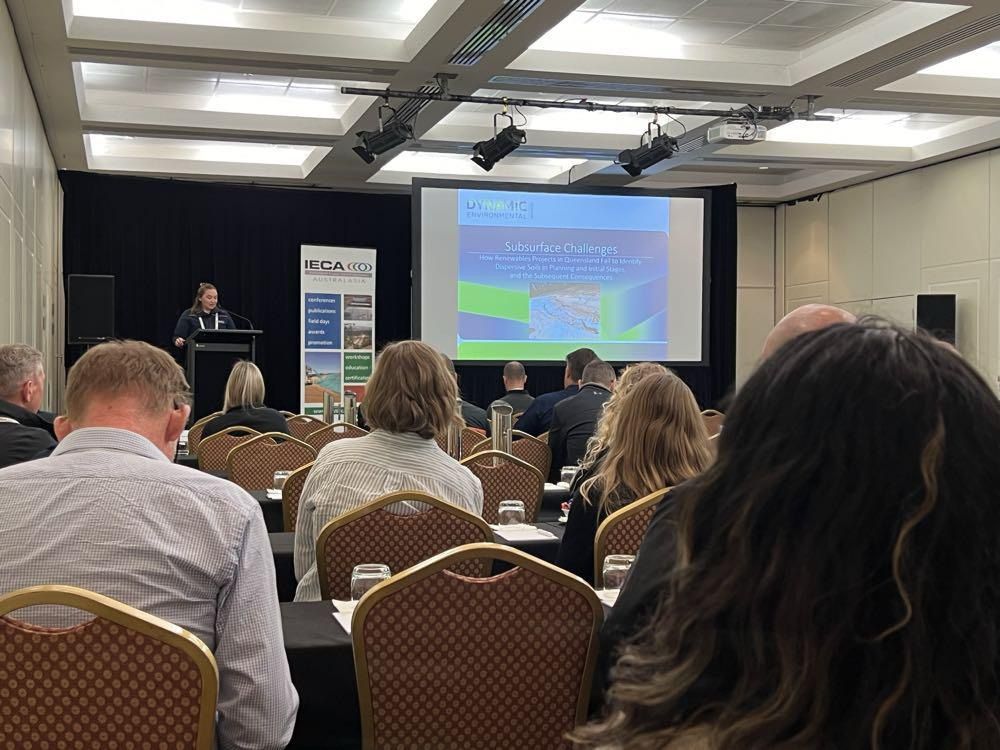
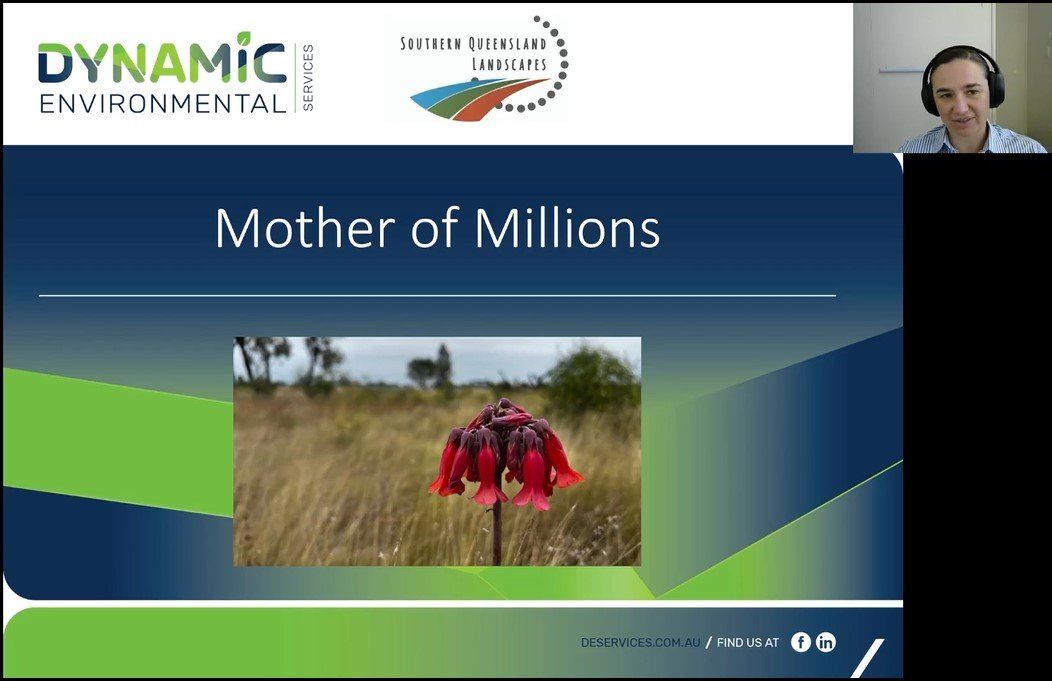
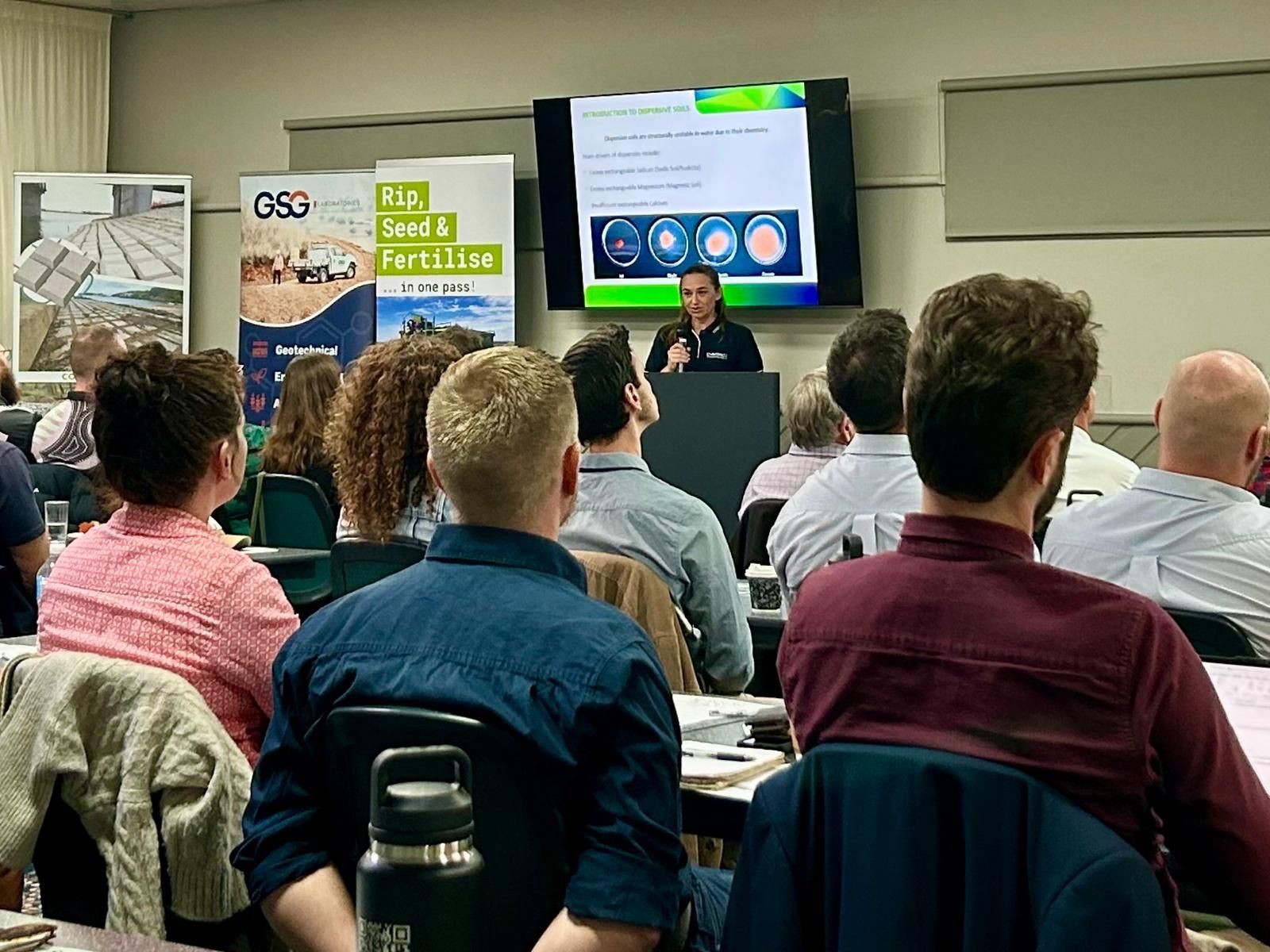
Improving environmental outcomes requires more than plans, procedures and compliance requirements. It requires people across the industry to understand why environmental issues occur, how risks can be identified early and what practical solutions can be implemented in the field. Dynamic Environmental Services regularly develops and delivers technical training, conference presentations and industry workshops focused on erosion and sediment control, soil science, rehabilitation and environmental risk management. Drawing on experience across renewable energy projects, our presentations combine technical knowledge with practical field experience, providing attendees with real-world examples of environmental challenges and lessons learned from construction and operational projects. Recent presentations have been delivered to industry conferences, professional associations and engineering organisations, including erosion and sediment control specialists, environmental professionals, engineers, project managers, supervisors and decision-makers responsible for environmental performance and project delivery. A key focus of these presentations is bridging the gap between environmental requirements, engineering design and field implementation. Topics are selected to address common industry challenges, encourage critical thinking and promote practical, evidence-based approaches to environmental management. Presentation topics have included: Erosion and sediment control design and implementation Dispersive soils and erosion risk management Rehabilitation planning and revegetation challenges Renewable energy construction and environmental management Drainage design and constructability considerations Soil science for environmental practitioners and engineers Environmental risk management and compliance Lessons learned from large-scale infrastructure projects Practical approaches to achieving sustainable rehabilitation outcomes Rather than relying solely on theory or guideline requirements, presentations are developed using project case studies, field observations, technical investigations and practical examples gathered across a wide range of construction and operational environments. This approach allows attendees to better understand not only what environmental controls are required, but why they are necessary and how they can be successfully implemented. Many sessions are tailored to the specific audience, ensuring the content is relevant to their role, level of experience and project challenges. Whether presenting to specialist environmental professionals, engineering teams or project delivery personnel, the focus remains on providing practical knowledge that can be applied immediately in the workplace. Outcomes: Improved understanding of erosion, sediment control and rehabilitation principles Greater awareness of environmental risks associated with construction activities Enhanced collaboration between environmental and engineering disciplines Increased capability to identify and manage environmental risks early Practical lessons learned shared across industry sectors Improved understanding of soil-related constraints and rehabilitation challenges Increased confidence in environmental decision-making Better integration of environmental considerations into project planning and design  Through conference presentations, workshops and tailored training programs, Dynamic Environmental Services continues to contribute to the development of industry knowledge and the improvement of environmental practices across Australia.
By Lisel Dingley June 10, 2026
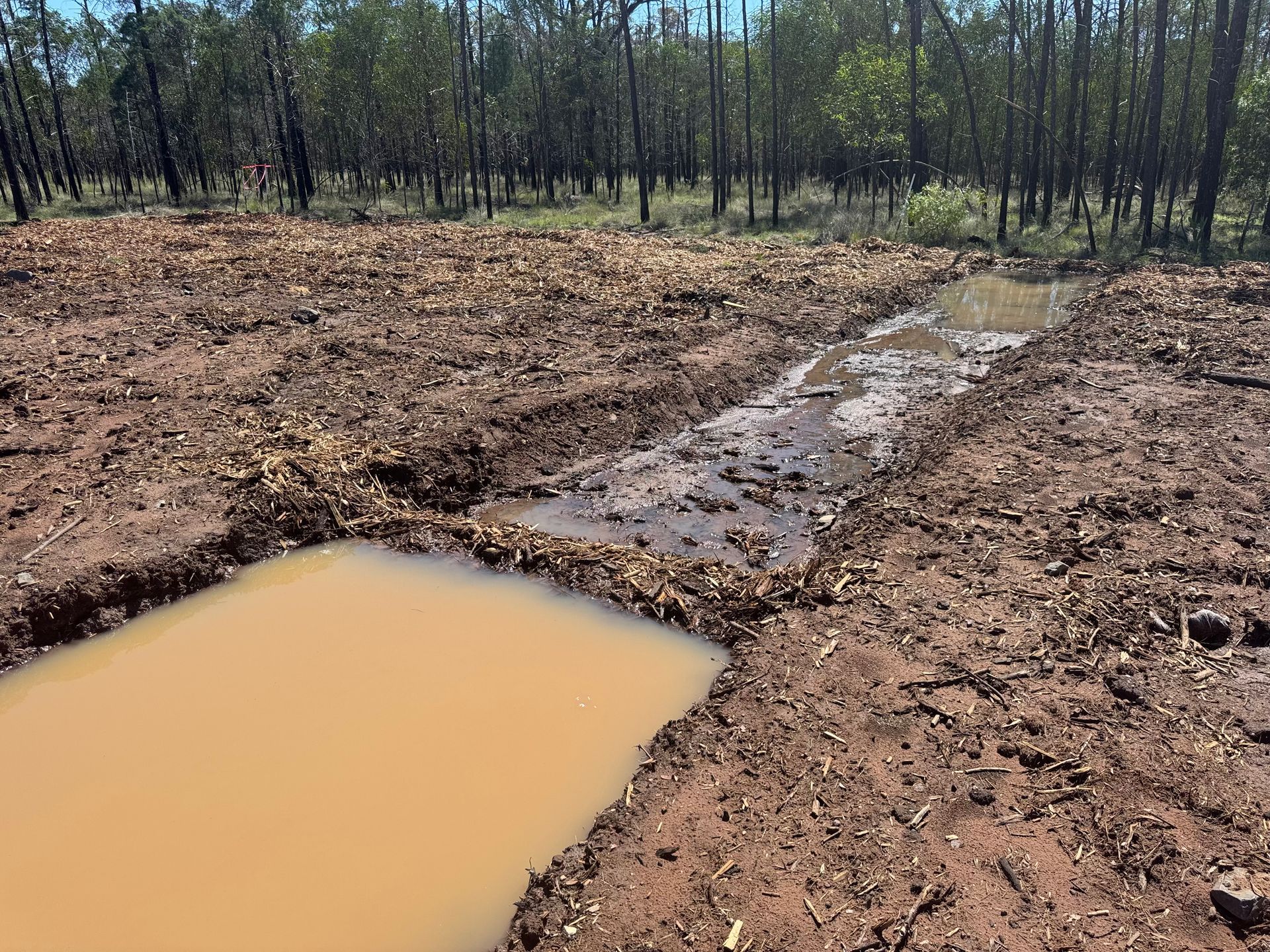
Linear infrastructure projects present unique erosion and sediment control challenges. Construction often occurs across long distances, traversing multiple soil types, land uses and drainage features, while operating within tight construction footprints and even tighter project timeframes. Dynamic Environmental Services has supported gas infrastructure projects involving civil construction of well pad and installation of gathering networks by developing practical, site-specific erosion and sediment control solutions tailored to the realities of construction in the field. Rather than relying solely on desktop assessments, our approach involves visiting sites, understanding the landscape, reviewing soil conditions, speaking directly with project personnel and gaining an understanding of construction methodologies and operational constraints. This allows erosion and sediment control measures to be designed with both environmental performance and constructability in mind. Our services included: Preparation of Erosion and Sediment Control Plans (ESCPs) Site inspections and field assessments Identification and management of dispersive soils and erosion risks Development of project-specific ESC standard drawings and details ESC advice for well pad construction and gathering Rapid turnaround for changing project timeframes ESC inspections and compliance advice ESC training for environmental professionals, civil supervisors and plant operators Ongoing technical support throughout project delivery By understanding both environmental requirements and construction constraints, we were able to develop solutions that could be effectively implemented in the field while maintaining compliance with project requirements. Outcomes Practical and constructable ESC solutions developed Site-specific controls tailored to local soil and landscape conditions Improved understanding of ESC requirements among project personnel Rapid technical support provided to meet construction timeframes Reduced risk of erosion, sediment release and environmental non-compliance ESC measures designed to be both effective and achievable in the field