
Rehabilitation

Rehabilitation

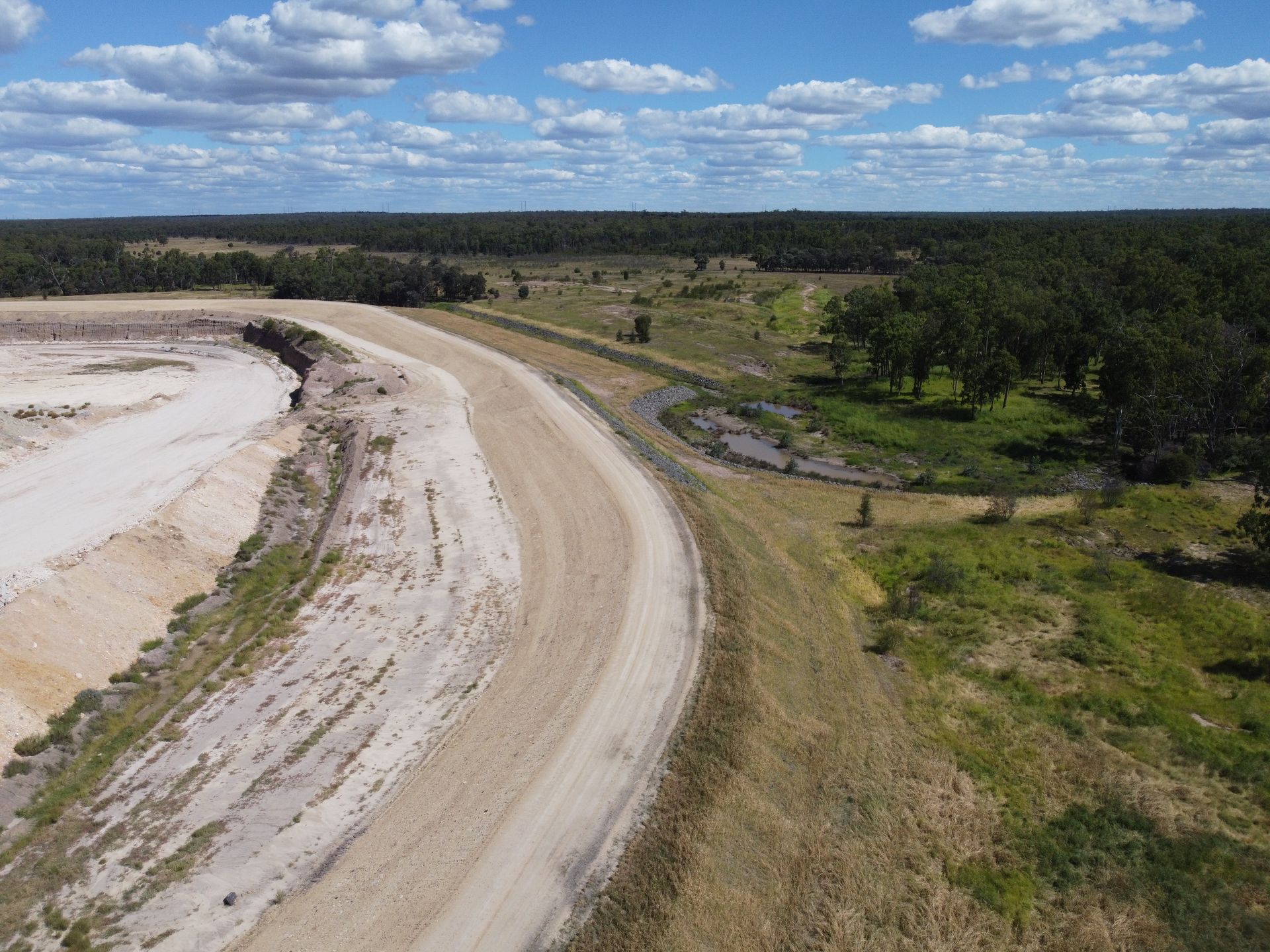
Successful rehabilitation requires more than simply spreading seed and hoping for rain. Soil conditions, topsoil quality, species selection, site preparation, stabilisation methods and ongoing management all influence whether disturbed land successfully returns to a stable and productive condition.


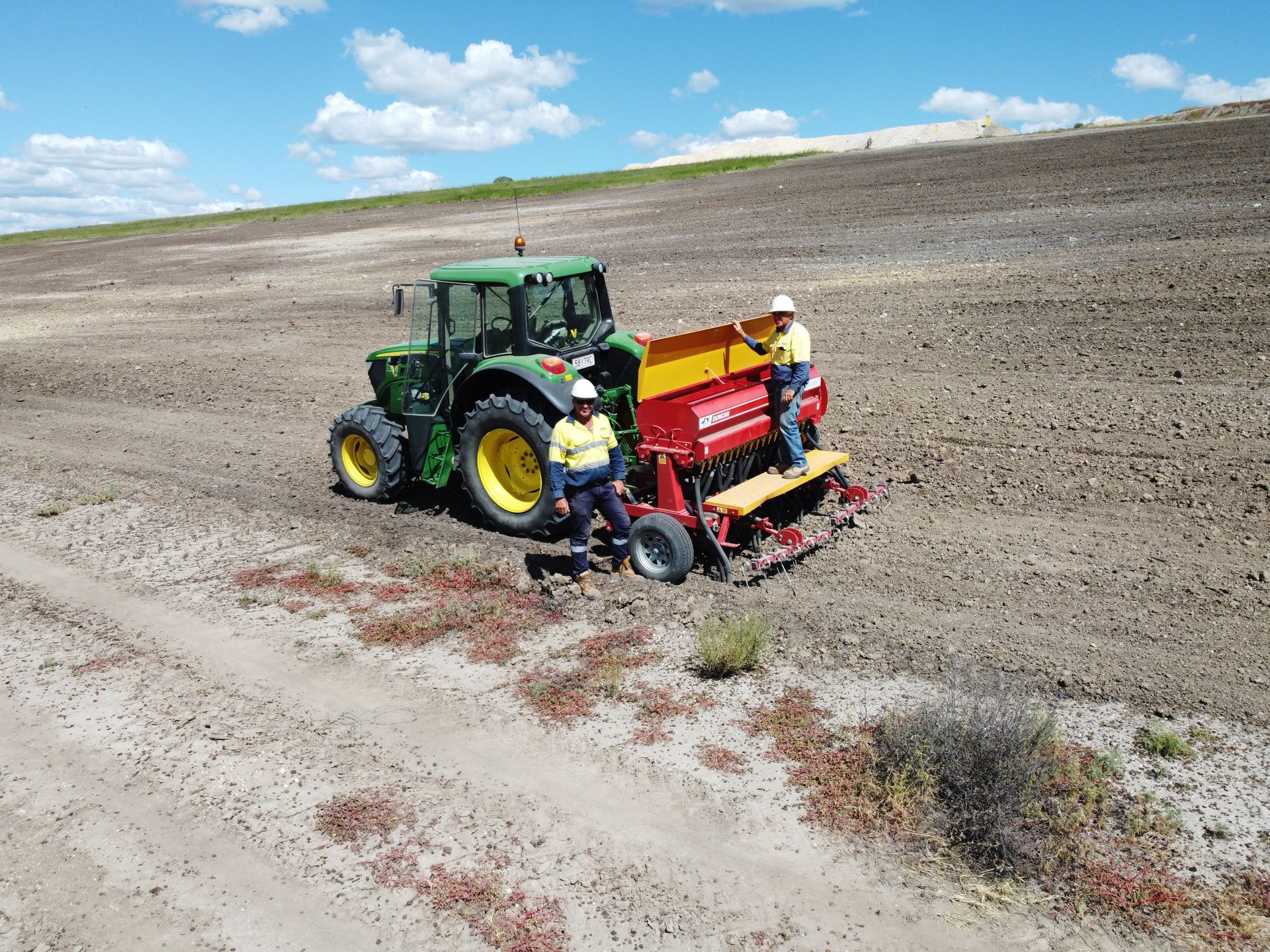
Dynamic Environmental Services provides practical rehabilitation services for renewable energy, mining, gas, waste, construction and linear infrastructure projects throughout Australia. We combine expertise in soil science, erosion and sediment control, revegetation and environmental compliance to develop rehabilitation strategies that are technically robust, practical to implement and aligned with project objectives.


Whether rehabilitation is being planned from the outset or a project is experiencing difficulties establishing vegetation, we work with clients to identify constraints, develop practical solutions and improve long-term rehabilitation outcomes.


Our recommendations are developed using a holistic assessment of the site and consider not only contractual and approval requirements, but also soil characteristics, climate, landscape setting, surrounding vegetation communities, current and future land uses, operational constraints and landholder expectations to deliver realistic, sustainable and fit-for-purpose rehabilitation outcomes.


Our rehabilitation services include:

  • Rehabilitation planning and methodology development
  • Rehabilitation assessments and investigations
  • Soil sampling, analysis and interpretation
  • Soil amendment recommendations
  • Topsoil management advice
  • Revegetation planning and species selection
  • Seed mix development
  • Hydromulch specification development
  • Stabilisation and vegetation establishment strategies
  • Development of success criteria
  • Rehabilitation monitoring programs
  • Independent reviews of rehabilitation performance
  • Rehabilitation project management and contractor coordination


Many rehabilitation failures can be traced back to issues that occur long before seeding begins, including poor topsoil management, unsuitable species selection, inadequate consideration of soil limitations, or a lack of integration between rehabilitation objectives and construction activities. Identifying and addressing these risks early can significantly improve rehabilitation outcomes and reduce the need for costly rework.


Successful rehabilitation requires more than achieving short-term groundcover targets. Rehabilitation strategies should consider soil function, erosion resistance, vegetation establishment, long-term land stability and the intended future use of the land. Our team develops practical, site-specific recommendations that balance environmental objectives with the realities of ongoing land management and future land use requirements.


We have extensive experience supporting rehabilitation programs on renewable energy, mining, gas and infrastructure projects, including sites affected by poor vegetation establishment, erosion, soil constraints and challenging climatic conditions. This practical experience allows us to develop realistic recommendations that consider both technical requirements and project constraints.


Whether you require a rehabilitation plan, soil investigation, seed mix review, hydromulch specification or support managing rehabilitation works, we provide practical advice focused on achieving stable, sustainable and cost-effective outcomes.
How can we help?

Related Projects and Articles
By Lisel Dingley July 23, 2026
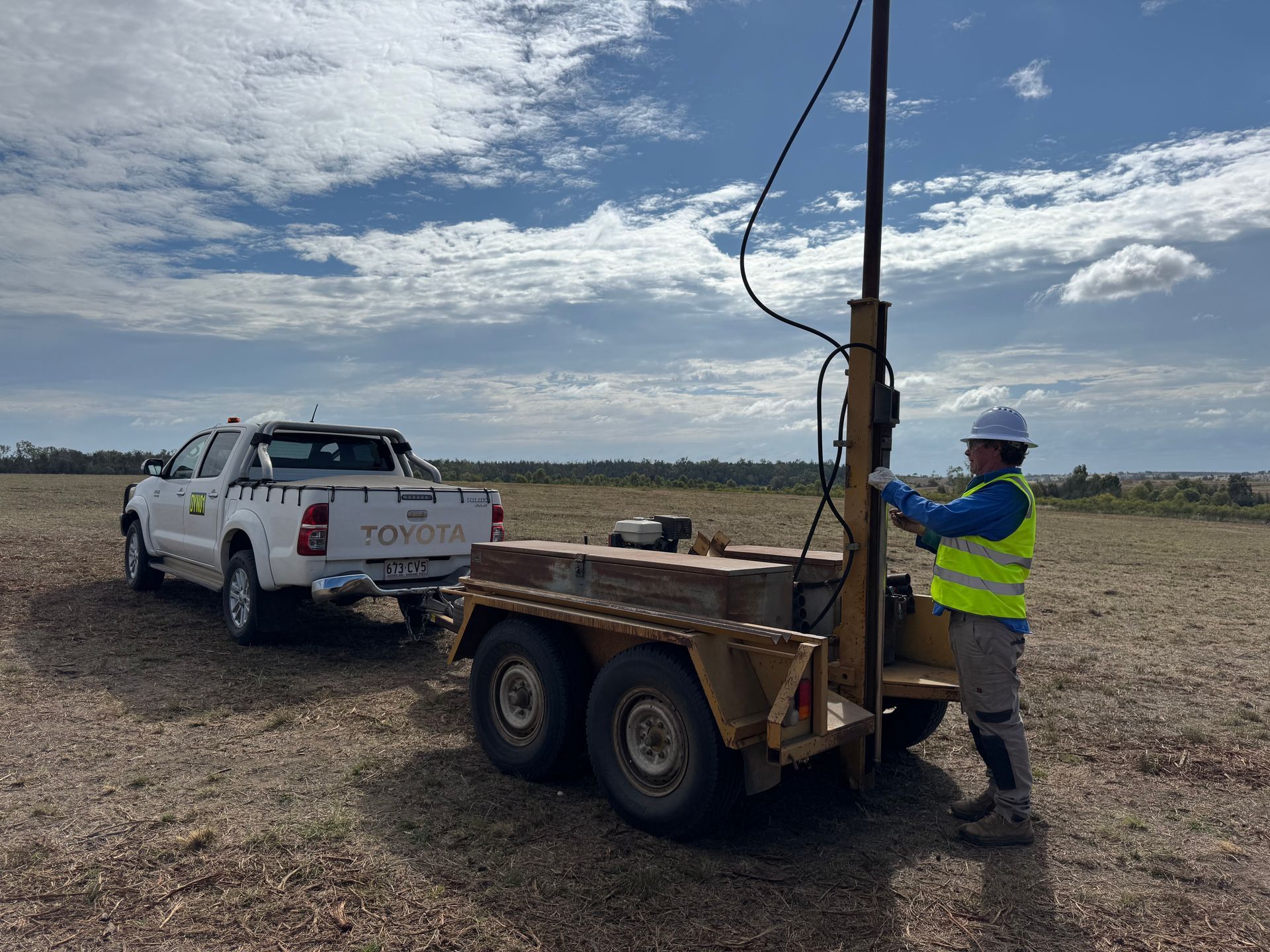
Successful rehabilitation begins long before construction is complete. Understanding the physical and chemical properties of the soil allows rehabilitation to be tailored to site conditions, improving vegetation establishment, reducing erosion risk and delivering more sustainable long-term outcomes. Dynamic Environmental Services was engaged by GRS to undertake a detailed soil investigation and develop a Rehabilitation Plan for the Wandoan South Solar 2 project in Queensland. The project required a comprehensive understanding of soil characteristics across the site to develop practical recommendations for soil amelioration, revegetation and long-term rehabilitation. Working in conjunction with agronomist David Hall, our team designed and implemented a comprehensive soil sampling program before interpreting the laboratory results to develop a rehabilitation approach tailored to the site's unique constraints. The recommendations considered not only vegetation establishment, but also erosion risk, soil stability, dispersive soils, nutrient deficiencies, construction sequencing and the long-term performance of rehabilitated areas. Rehabilitation on major infrastructure projects is often approached using generic specifications that assume soil conditions are relatively consistent across a site. However, soil characteristics can vary significantly over relatively short distances, particularly where dispersive, sodic and magnesic soils are present. Understanding these variations allows rehabilitation to be tailored to the specific constraints of a project, improving vegetation establishment while reducing erosion and long-term maintenance requirements. Our services included: Soil investigation and sampling program design Field soil assessment and landscape observations Laboratory testing program development Soil chemistry interpretation Dispersive and sodic soil assessment Soil fertility assessment Soil amelioration recommendations Fertiliser recommendations Species selection Rehabilitation planning Erosion risk assessment Long-term rehabilitation planning The investigation included the collection of 135 soil cores across 27 representative sampling areas , targeting both surface and subsoil profiles to understand the characteristics most likely to influence rehabilitation success. Laboratory testing assessed a broad range of physical and chemical soil properties, including aggregate stability, particle size distribution, exchangeable cations, nutrient status, salinity and pH, providing the information required to develop practical, evidence-based rehabilitation recommendations. The investigation identified widespread sodic and magnesic soils, highly dispersive soil conditions and significant nutrient deficiencies that had the potential to affect vegetation establishment, increase erosion risk and compromise long-term rehabilitation success. Rather than relying on standard rehabilitation specifications, Dynamic Environmental Services developed practical, evidence-based recommendations for soil amelioration, fertiliser application, species selection and rehabilitation methodologies tailored to the site's specific conditions. The rehabilitation recommendations also considered stockpile management, progressive rehabilitation, erosion protection measures, concentrated runoff from solar panel arrays and long-term monitoring requirements, providing the client with a practical framework to guide rehabilitation throughout construction and into the operational life of the project. By combining expertise in soil science, erosion and sediment control, rehabilitation and construction, Dynamic Environmental Services developed practical recommendations that could be readily implemented during construction while supporting long-term rehabilitation outcomes. The result was a rehabilitation approach that was scientifically informed, practical to deliver and tailored to the specific conditions of the site. Outcomes Site-specific rehabilitation recommendations based on detailed soil investigations Practical recommendations for soil amelioration, fertiliser and species selection Rehabilitation approach tailored to the site's soil and construction constraints Improved long-term vegetation establishment and land stability Reduced erosion and rehabilitation risks through evidence-based planning Client Feedback "Thank you for the recent Soil Sampling and Revegetation Plan. I would just like to mention that it was an absolute pleasure working with you and the whole Dynamic team. I was particularly impressed with Dynamics seamless interaction into our management systems and the high quality of communications both emails and phone calls which solved dilemmas and made decisions clear, simple and easy. Additionally, I would like to advise that our client was particularly impressed with the report which resolved several weeks of internal circular discussion upon their overnight review. In short, they were impressed with the quality, depth and thoroughness of the report which gave them the confidence to approve our site management plan."
By Lisel Dingley June 10, 2026
Development of a Bespoke Rehabilitation Strategy
By Lisel Dingley August 27, 2024
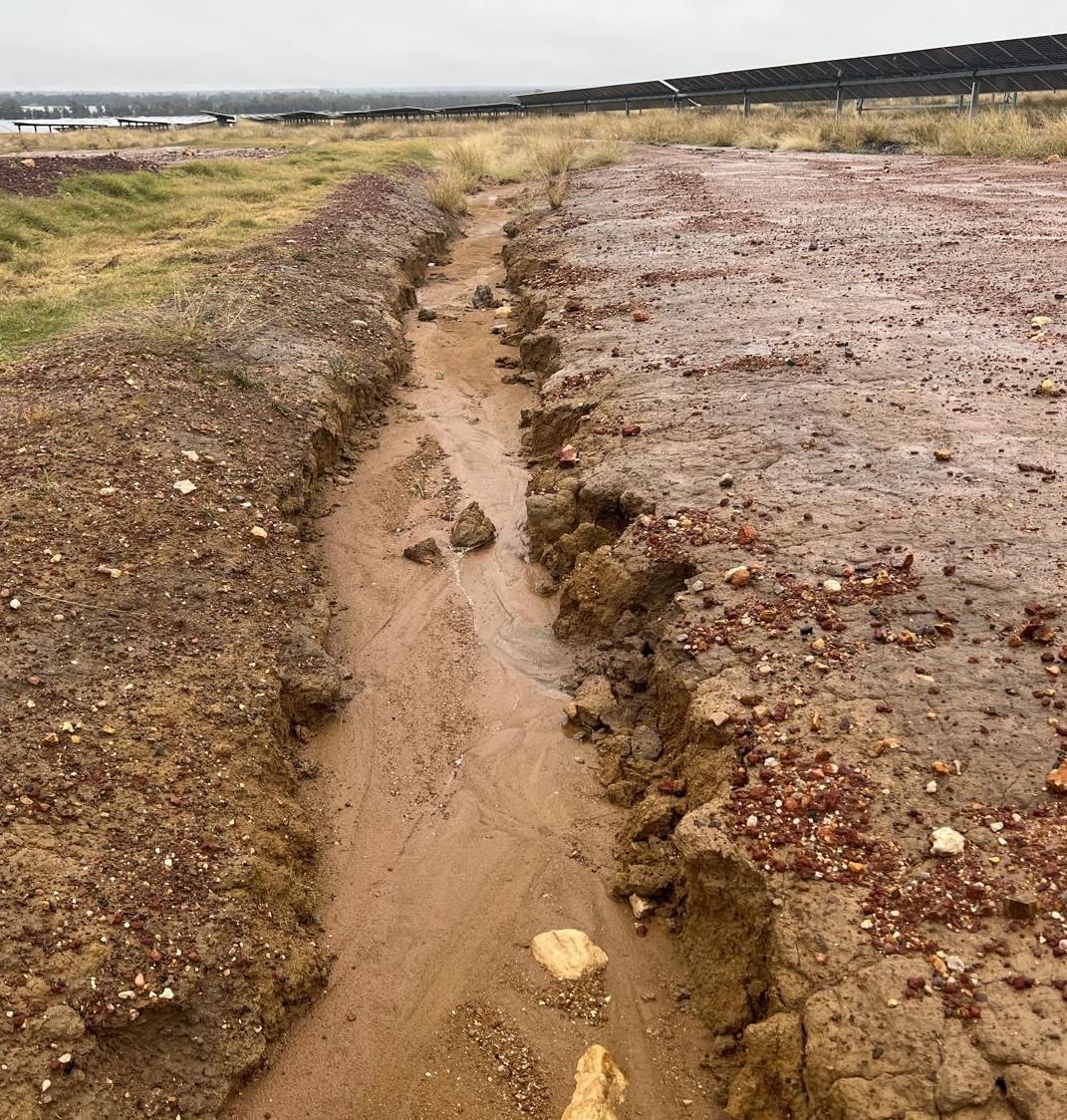
In Queensland, it's no secret that the renewables industry is booming. However, consistently, particularly in the south of the state, these projects are quickly encountering an unexpected challenge - dispersive soils. While those in the erosion and sediment control field could reasonably foresee this based just on the geographic location or through a brief site visit only, consistently renewables projects are not aware of this aspect until well into construction, when unexpected erosion issues start to emerge. It may be surprising that these very significant projects, with budgets of hundreds of millions of dollars, can overlook an aspect that is likely to cause considerable challenges if management is not planned and budgeted. Failure to identify dispersive soils in project scoping and planning can result in development of inappropriate erosion and sediment control plans, unsuitable rehabilitation plans, failing rehabilitation, and lengthy maintenance periods of erosion and sediment controls until groundcover is achieved (including desilting, reshaping, restabilising). Drains fail due to erosion, releasing sediment which settles downgradient, reducing drain capacity, resulting in drain overtopping and sediment deposition onto roads or hardstands (reducing trafficability) or releasing sediment into waterways. Erosion and poor stormwater management from failed drainage can mean water is not managed as per design and begins to erode in and around infrastructure, including roads, hardstands, solar panel piles, and waterway culvert crossings, resulting in expensive repairs of often difficult to access areas (particularly in solar construction due to tracking infrastructure). Some projects believe they will solve their erosion issues with hard reinforcing, like rock placement (riprap) or shotcrete or concrete, and are consequently shocked when these expensive repairs are promptly undermined. These impacts can result in landholder and broader community complaints, environmental consequences, compliance challenges, and costly rework. During project planning, there are multiple avenues to identify this challenge. From an initial desktop perspective, publicly available soil mapping with attached descriptions could be reviewed, which will indicate dispersiveness. Even at the highest level of state-wide soil classification, the considerable portion of the state mapped as sodosols should be an indication of potential dispersiveness, named due to high concentrations of exchangeable sodium, driving sodicity, which often results in dispersion. Assuming these aspects are overlooked, the early onsite inspections allow for an opportunity to visually observe indications of dispersive soil, often presenting as gully erosion along pre-existing roadsides and along farm tracks, or as gully or tunnel erosion adjacent to waterways, which contain the classic 'chocolate milk' water. These inspections are generally undertaken by ecologists and geotechnical engineers, and rarely, if ever, by erosion and sediment control specialists. Identifying this potential constraint is not in their purview, or skillset. Geotechnical investigations always include Emerson Testing, which is a measure of the dispersiveness of a soil, however this almost always is restricted to the depth of the base of foundations, well below the topsoils or subsoils likely to be disturbed, exposed, and requiring final stabilisation. However, even when shallower soils indicate dispersiveness, such as being Emerson Class 1 or 2, this is often only considered in foundation design, and is not considered in drainage design, erosion and sediment control or rehabilitation scoping, planning and budgeting. Due to these common oversights, it is important to turn our attention to developing improved recommendations for renewables developers to identify dispersive soils, and communication of these. Using a common ~40 turbine wind farm as an example, which is generally linear infrastructure (consisting of significant lengths of roads connecting turbines), and taking guidance from the IECA White Books, Chapter 3 Site Planning, Table 3.2, the required number of sample sites would be in excess of 930. Using an estimate of 1 sample location per 30 mins, it is unlikely that a wind developer will be interested in 232 days of soil sampling prior to/during project scoping. While the gold standard would likely consist of a full-scale soil survey including sampling for all relevant characteristics (including dispersiveness) and development of associated soil mapping, with final micrositing of project infrastructure (particularly wind turbines) having consideration of soil characteristics, it is unrealistic to move immediately from the current process to this. In order to identify the existence of dispersive soils, a well-designed reduced soil sampling program and analysis suite is possible, which will fast track the process and reduce costs. In our experience, Emerson Aggregate Testing has not proven to be a reliable indicator of dispersion, if other soil characteristics are disregarded. If targeting dispersion only, a more suitable suite is one that includes, at least, exchangeable basic cations (Calcium, Magnesium, Potassium, Sodium), Cation Exchange Capacity and Particle Size Distribution, in addition to Emerson Aggregate Testing (EAT). In our experience, soils can exhibit severe dispersion in the field, and have exchangeable cation aspects which would indicate a high likelihood of dispersiveness (such as sodic or magnesic soils), but have moderate to low dispersiveness based on Emerson testing. The reason for this is currently unknown comprehensively, though some theories are held and are under investigation. Furthermore, sands and gravels are unsuitable for Emerson testing, and failure to undertake Particle Size Distribution (or field assessment) to identify these may result in EAT scores that indicate negligible dispersiveness, yet the soil may lack soil cohesiveness, which tend to erode regardless of dispersiveness. Identification of dispersive soils is critical in the planning and design stage of renewables projects to prevent budget blowout. Topsoils and shallow subsoils should be included in sampling regimes as part of project scoping, or at least, early works. A reduced sampling density and analysis scope is suggested to be sufficient for this purpose, and should be undertaken by all renewables developers. Last updated 27 August 2024. This information is general in nature, may not be current, and may not be applicable to your specific circumstances. It should not be used as a substitute for site-specific professional advice.
By Lisel Dingley August 13, 2024
What is a weed?