Approvals & Amendments

Environmental approvals are often one of the most critical stages of a project. Decisions made during planning and approvals can influence project costs, construction methods, operational requirements and long-term compliance obligations for years to come.


Dynamic Environmental Services assists clients to navigate environmental approvals pathways, manage regulatory risk and develop practical, achievable environmental commitments. We work across renewable energy, waste, landfill, infrastructure and industrial projects, helping clients understand approval requirements while ensuring commitments remain realistic, effective and capable of being implemented in practice.


Our approvals and amendments services include:

  • Third-party constructability reviews of environmental management plans and approval documentation
  • Environmental Authority applications, amendments and surrender applications
  • Development Approval and Operational Work Permit environmental inputs
  • Waterway Barrier Works notifications
  • Environmental approvals strategy and pathway advice
  • Secondary approvals identification and coordination
  • Pre-lodgement meetings and regulator engagement
  • Review and interpretation of approval conditions
  • Coordination and review of specialist technical studies


A common issue encountered on major projects is the inclusion of environmental commitments, management measures and approval conditions that appear reasonable on paper but are difficult or impossible to implement in practice. These commitments are often developed during the planning phase before the practical realities of construction and operations have been fully considered. Once approved, they can create significant compliance challenges, unnecessary costs and ongoing operational constraints.


Dynamic Environmental Services regularly undertakes independent reviews to identify impractical environmental commitments before submission, helping clients avoid unnecessary compliance burdens, operational constraints, future variations and costly project delays. Drawing on extensive experience supporting construction and operational projects, we assess approval documentation from the perspective of the personnel who will ultimately be responsible for implementing the commitments in the field.


We have strong experience supporting projects during construction and operation, particularly within the renewable energy sector. This practical experience allows us to assess environmental commitments not only from a regulatory perspective, but also from the perspective of project managers, environmental personnel, supervisors and contractors responsible for delivering the work. We strongly believe clients should not be overcommitted through unnecessary complexity, impractical management measures or excessive compliance obligations.


Environmental approvals often extend beyond a single Environmental Authority or Development Approval. Many projects require multiple supporting approvals, permits and licences, each with their own conditions, technical requirements and approval pathways. We assist clients to identify approval requirements early, coordinate supporting studies and manage the interaction between primary and secondary approvals to reduce project risk and avoid unnecessary delays.


As a Queensland-based consultancy, we also bring a strong understanding of local land uses, soils, climate, environmental risks and regulator expectations. This local knowledge, combined with practical project experience, allows us to provide environmental approval advice that is grounded in both technical and operational reality.


Whether you require support obtaining a new approval, amending an existing Environmental Authority, surrendering an Environmental Authority, coordinating a pre-lodgement meeting or independently reviewing approval documentation before submission, we provide practical, defensible and project-focused advice designed to support successful project delivery and long-term compliance.

How can we help?

Related Projects and Articles
By Lisel Dingley June 11, 2026
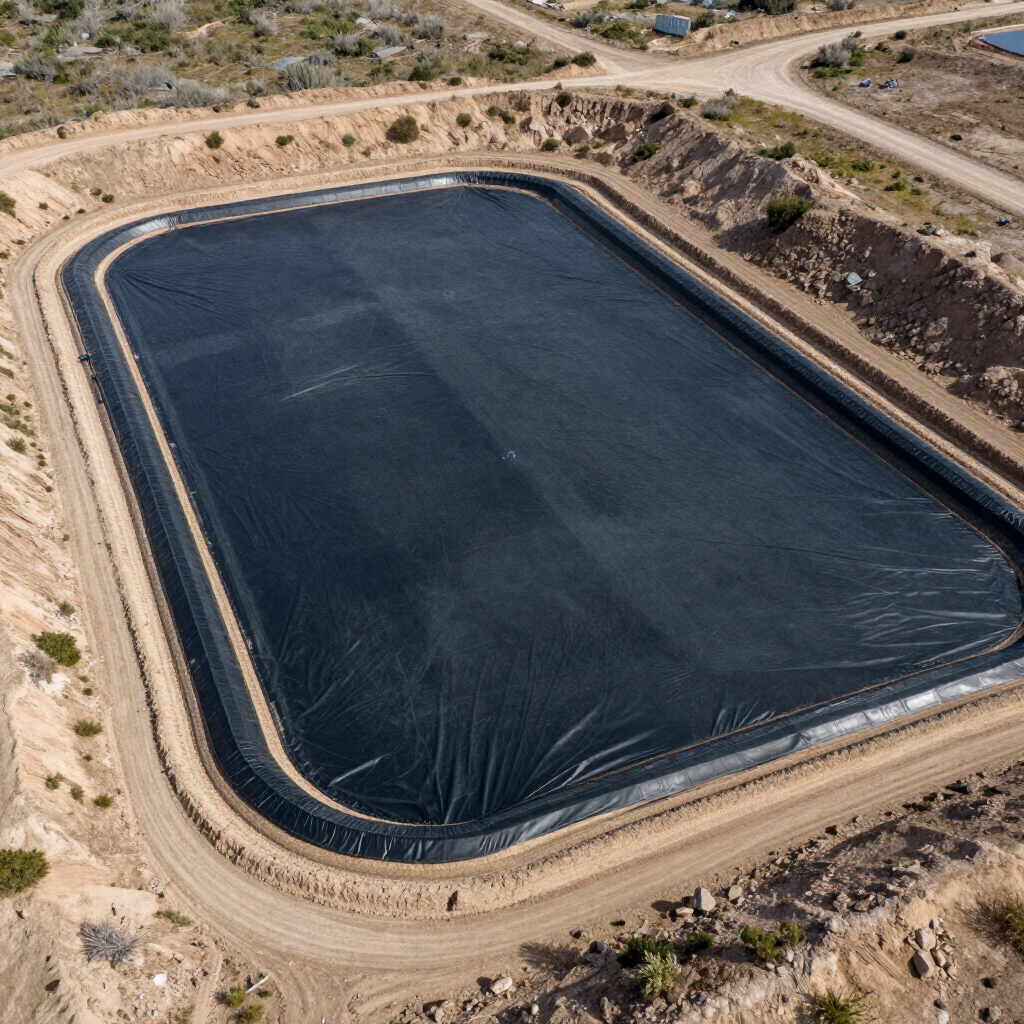
Developing major waste infrastructure requires the coordination of multiple technical disciplines, regulatory pathways, stakeholders and approvals processes. Without effective project management, even well-designed projects can experience delays, scope creep, increased costs and avoidable approvals, construction and operational risks. Dynamic Environmental Services was engaged to provide project management and client-side representative services for the planning and approvals of a new regional waste management facility with a projected development value exceeding $20 million. The proposed facility was to be developed on a site subject to an existing Environmental Authority and Mining Lease, creating a complex approvals pathway. Acting on behalf of the client, our role was to coordinate specialist inputs, manage project delivery and ensure technical, regulatory and commercial considerations remained aligned throughout the planning and approvals process. Our services included: Project planning and programme management Principal's Representative services Coordination of environmental, engineering and specialist consultants Development of detailed scopes of work for technical investigations Procurement support and tender evaluation Review of consultant deliverables and technical studies Environmental Authority application development Advice regarding mining lease relinquishment and existing environmental obligations Stakeholder and regulator engagement Risk identification and management Integration of multidisciplinary technical inputs Quality assurance and strategic project oversight A key challenge of the project was coordinating multiple workstreams while ensuring all technical studies, approvals pathways and project decisions remained aligned with the client's long-term objectives. Our role was not to replace specialist consultants, but to ensure their outputs were integrated into a cohesive, defensible and deliverable approvals strategy. By acting as a single point of coordination between the client, regulators and specialist consultants, we were able to provide clear direction, maintain project momentum and help reduce the risk of costly rework later in the approvals process. Outcomes Improved coordination across multiple technical disciplines Streamlined procurement and consultant management processes Clearer alignment between project objectives and technical deliverables Reduced approvals and programme risk Efficient integration of specialist consultant inputs Ongoing progress toward a defensible and deliverable approvals pathway
By Lisel Dingley March 29, 2026
We regularly see sites assume that because they hold approval for an ERA, they can undertake anything that falls within that ERA. That’s not how Environmental Authorities work. An EA does not approve the full scope of what an ERA could include. It approves what you applied for — including the way the activity is undertaken, the infrastructure used, the controls you committed to and the scale and intensity you described. Sometimes, there are some obvious limitations set by your EA per ERA. For example, you may hold ERA 54 Mechanical Waste Processing, Threshold 2 (general waste), therefore, if you want to take regulated waste, you know that you aren't licenced to do so, as it is Threshold 3 & 4. It's the more subtle changes where things can come unstuck, particularly in the waste management ERA space. What Your EA Actually Covers When your EA is granted, it is based on a specific proposal. That proposal includes: The activity itself Where it will occur What materials or wastes are involved How it will be undertaken What controls are in place to manage environmental risk That combination forms the risk profile that was assessed and approved. It is not a blanket approval for all variations of that activity/ERA. Where Sites Get Caught Out Most non-compliances in this space are not deliberate. They come from operational changes that seem minor at the time: Moving an activity to a more convenient location Scaling up volumes Changing inputs slightly Adjusting how something is managed day-to-day Individually, these can seem insignificant. But from a regulatory perspective, they can fundamentally change the risk to environmental values — which means they fall outside what was originally approved. Example 1 – Crushing Concrete under ERA 54 You are approved to undertake crushing concrete under ERA 54. What was approved: Crushing within an enclosed building Dust suppression sprays on the machine Settled dust wet cleaned within bunded area, and vac truck removed offsite to be disposed at facility that is licenced to accept it You now want to undertake crushing outdoors. It’s still crushing — so it feels like it should be fine. But the risk profile is no longer the same: Dust is no longer contained and can travel offsite Fine material can be mobilised into stormwater Noise is no longer attenuated by the building (for offsite sensitive receptors/neighbours) Wind becomes a factor The original approval was based on a controlled system. Moving outdoors changes how emissions behave and where they end up. Example 2 – Wastewater Reprocessing under ERA 55 You are approved to receive and reprocess wastewater in ponds. What was approved: A purpose-built pond with engineering design Construction Quality Assurance (CQA) completed Leak detection system installed Groundwater monitoring bores in place Defined and assessed allowable inputs You now want to construct another pond, or accept a slightly different input. Again, this appears similar. But, because you think you are already approved for this activity, you aren't putting together an EA application which steps through all the requirements, and therefore, some aspects get missed: If the new pond is missing any of those design or verification elements, seepage risk increases Without monitoring or leak detection, early warning systems are lost Different inputs may behave differently in storage or treatment (for example, odour risk) The original assessment of contaminants and volumes may no longer apply Even if the pond looks the same, the certainty of performance and level of risk is not the same. Example 3 – Other Activities under ERA 55 You are the same site as Example 2, already approved under ERA 55 to receive and reprocess wastewater in ponds. You now want to treat contaminated soils using stabilisation (e.g. lime dosing). It’s still ERA 55 — so it feels like you should be covered. But let's think about what was approved: Treatment of liquid waste in lined ponds Risks primarily related to odour, pond failure, seepage and groundwater What changes: Dust generation from handling soils Airborne contaminants and exposure pathway To be undertaken in an unlined, unbunded area Stormwater contamination from open treatment areas Land contamination risks Potential for offsite reuse (if uncontrolled, contamination of other sites) Same ERA — completely different risk. The original EA for wastewater ponds does not consider these impacts, so the new activity has not been approved. Why “Almost the Same” Isn’t the Same A key point that is often missed is this: Environmental risk is driven by more than just the activity itself. It is driven by: How emissions are generated How they are controlled The pathways they can travel The receptors they can reach Small changes to any of these can significantly change the outcome. Two activities that look identical operationally can have very different impacts once you consider odour, dust, surface water, noise, or groundwater pathways. When Do You Need an EA Amendment? As a general rule: Assume an EA Amendment is required. Request a pre-lodgement meeting, be clear about the change you are thinking of, and take guidance from the assessing officers. This is not a space for “we’ll just make the change and see how it goes”. Why It Matters Operating outside the scope of your EA is not just a paperwork issue. It can result in: Non-compliance with conditions Environmental harm or nuisance Regulatory action Be issued a stop works notice, essentially cutting off your source of income Costly and time-consuming remediation or retrospective approvals We often see sites end up in a far more difficult position trying to justify a change after the fact, rather than assessing it properly upfront. In Closing Your EA is not an approval for everything that falls under the ERA listed on your licence. It is approval for what you applied for — a specific activity, undertaken in a specific way, with specific controls. If those things change, your approval may no longer apply. That’s why the detail in your original EA application — and any amendments — matters. What you describe is what gets assessed, and ultimately, is what you are approved to do. If your operations are evolving, don’t assume you’re covered. Stop, assess the risk, and confirm whether an amendment is required. Give us a call to discuss your waste-related activities — whether it’s an original EA application or an amendment. Last updated 29 March 2026. This information is general in nature, may not be current, and may not be applicable to your specific circumstances. It should not be used as a substitute for site-specific professional advice.
By Lisel Dingley March 27, 2026
When is it a resource? When is it a waste? And what do you actually need to do? 
By Lisel Dingley November 19, 2024
Hypothetical Situation: A site’s Environmental Authority lists a number of groundwater bores, and states that they must be monitored for certain parameters 6 monthly. The EA has another condition which states that a groundwater review must be undertaken every 3 years by an appropriately experienced person (hydrogeologist). The site diligently samples the groundwater bores, and collates the field and laboratory results into a spreadsheet. However, those results are not reviewed when they are received… because the EA says that a groundwater review must be undertaken every 3 years, with no other specific review obligations. Given groundwater monitoring is intended as a warning system for contamination, is only reviewing the groundwater results every 3 years adequate to meet the General Environmental Duty of the Environmental Protection Act? Or a general EA condition such as the requirement to take all reasonable and practicable measure to prevent or minimise the likelihood of environmental harm being caused by the activities? When a dam containing hazardous waste is found to be leaking (found upon visual inspection), and subsequently the previous two years of groundwater data are reviewed and found to indicate this has been occurring prior to the visible leak being detected, it is likely this will not be looked upon favourably in a prosecution. “But it wasn’t time for our 3 yearly review!” is unlikely to be acceptable to the Regulator. Perhaps the EA has another condition which states that deterioration of groundwater quality must be reported to the Regulator within 14 days of receipt of the results. If data is only reviewed every 3 years, how is this condition being met? Perhaps the EA has a condition that requires the development and implementation of a Groundwater Monitoring Plan. It is suggested an adequate Groundwater Monitoring Plan should include guidance on interpretation of results, not just what, when and where to monitor. In our opinion, a Groundwater Monitoring Plan without interpretation guidance is defective and non-compliant with the intent of the condition. And if it does have guidance, is this clear enough to be accurately and swiftly executed by site personnel? We see many shortcomings in groundwater monitoring. Some of the most common and most significant include: · Data that clearly demonstrates potential environmental harm, which has not been noticed or investigated. There are some really easy ones in this space – your groundwater should not have PFAS in it! If it does, you either have identified contamination of the aquifer or contamination of your samples by your sampling methodology or the laboratory. Regardless, this should be promptly investigated. · Sites not being aware which of their bores is a leak detection bore and which are aquifer monitoring bores. One should be dry and the second should not be dry, and if this is not the case, this needs investigating. · Sites not having modelled groundwater flow direction to determine what is an upgradient (background) monitoring bore, and what is downgradient (identification) monitoring bore, and therefore not being able to interpret results adequately. · Not monitoring water quality in ponds that have the potential to leak, and therefore being unaware of the potential contaminants that would indicate seepage into the aquifer from the pond. Groundwater monitoring can be a highly effective detection system of potential environmental harm, but only if it is undertaken well, by persons with a comprehensive understanding of monitoring well construction, groundwater and contaminants, and with an adequate system of bores in place. Last updated 19 November 2024. This information is general in nature, may not be current, and may not be applicable to your specific circumstances. It should not be used as a substitute for site-specific professional advice.
By Lisel Dingley September 17, 2024
Definitely not! We have put together a quick list of aspects which might mean you cannot clear your Category X Vegetation. If the clearing may impact Matters of National Environmental Significance (MNES) under the Commonwealth EPBC Act, noting Category X (a State-based classification) does not remove the need for federal referral/approval, particularly where vegetation has regrown for 15+ years or provides habitat for threatened species. If Protected Plant Trigger Mapping exists across the area you intend to clear, and you have not had a flora survey undertaken and/or have a protected plant clearing permit. This can also apply if protected plants exist without trigger mapping. If the clearing is through a mapped waterway for waterway barrier works and may constitute a temporary (or permanent) barrier, and you haven't confirmed compliance with the Accepted Development Requirements for waterway barrier works, including submitting your pre-works notification. If the clearing is through a watercourse, and does not meet the exemption requirements of a Riverine Protection Permit, and you do not hold a Riverine Protection Permit. If you are not within your lot boundary, for example, when your lot or your adjoining lots are intersected by a mapped easement such as for a river or road, or you want to clear in the road easement in front of your property. If your clearing will (or may) disturb an animal breeding place and you do not have a Species Management Program in place. If your clearing will include ground disturbance and you have not met your Cultural Heritage Duty of Care requirements. If the vegetation is mapped as protected under a local government planning scheme, and you do not have an approved clearing permit from the local government. We often work with landholders who have unintentionally undertaken unpermitted clearing, and are subject to enforcement action by the Regulator. Remedying this is costly and time consuming. This is not a space for ‘act now, and ask for forgiveness later’. You may find yourself planting back out the trees you cleared plus 50% more, and being committed to ensuring their survival for the next 15 years. Last updated 8 April 2026. This information is general in nature, may not be current, and may not be applicable to your specific circumstances. It should not be used as a substitute for site-specific professional advice.
By Lisel Dingley September 29, 2022
With hydrogen a new and emerging industry, associated development applications are being closely analysed. Our client’s development approval application had been denied due to an insufficient Environmental Management Plan. As an emerging technology, there are limited real world examples to lean on, so we worked closely with our client to understand their vision of an integrated solar, battery, air water generation and hydrogen project. Of particular importance to the Council was fire and explosion mitigation, and we drew on our complementary safety expertise to appropriately address this aspect. We prepared an Environmental Management Plan for resubmission to council, working closely with our client and their legal team to deliver a document which was accepted, unqueried, by the Council. Through this process, we also identified opportunities for improvement in their existing Environmental Authority and suggested amendments to improve compliance achievability once the site is operation. This is the second disputed development approval application we have successfully assisted. Previously, a client’s application for a brewery had been disputed by the council. We prepared a thorough assessment against relevant planning legislation for also, an undisputed approval. This project was located proximal to a high-risk flood zone and residential areas, which required careful consideration and justification. Both projects were supported by our in-house draftsperson (Surveyor & Civil Engineer) who produced supporting mapping.
By Dynamic Environmental Services August 18, 2022
Waste management facilities that accept regulated wastes require robust environmental monitoring and management systems to ensure compliance, protect environmental values and identify potential issues before they become significant risks. Dynamic Environmental Services supported the ongoing environmental management of a regulated waste facility accepting a range of waste streams, including PFAS-impacted materials and liquid wastes. The project required the development of practical and defensible environmental monitoring and management systems capable of supporting both operational decision-making and regulatory compliance. Our role involved reviewing historical monitoring data, assessing site-specific risks and developing a tailored monitoring and management framework aligned with the site's operations, Environmental Authority requirements and contaminants of concern. Our services included: Review of historical environmental monitoring data Assessment of Environmental Authority requirements Development of Environmental Monitoring and Management Plans Review and optimisation of monitoring programs Identification of site-specific contaminants of concern Groundwater monitoring and sampling Surface water and receiving environment monitoring Landfill gas monitoring Leachate and received wastewater monitoring Quarterly monitoring and reporting Trend analysis and interpretation of monitoring results Environmental compliance advice and support Development of practical management recommendations A key objective of the project was ensuring that monitoring activities generated meaningful information rather than simply collecting data to satisfy compliance requirements. Monitoring locations, analytes and reporting processes were constantly reviewed to improve the site's ability to identify emerging issues, understand environmental trends and support proactive environmental management. The project also required consideration of long-term environmental liabilities, operational requirements, regulatory expectations and financial assurance obligations. By integrating monitoring, management planning and data interpretation, we helped provide a clearer understanding of environmental risks and a more effective framework for ongoing site management. Outcomes Improved environmental monitoring and management framework Monitoring programs aligned with site-specific risks and contaminants of concern Development and maintenance of a comprehensive environmental monitoring database Improved ability to identify and respond to emerging environmental trends Ongoing compliance with Environmental Authority requirements  Practical environmental management recommendations to support ongoing operations