
How to get the most out of dressage lessons
If you aren't improving between your dressage lessons, the problem probably isn't your coach, but your system.
Dressage lessons are one of the most valuable tools a rider has, but only if you know how to use them effectively.
You’re not alone. Many riders invest in lessons but struggle to carry the progress through to their everyday rides.
If you want to get the most out of your lessons and accelerate your progress, it’s time to rethink how you approach your lessons.
Let's start with one of the most important (and most overlooked) factors: pre-planning.
1. Pre-Planning
As the rider, you should be coming into each lesson with a clear idea of what you want to work on.
How often does this happen?
Coach: "How are things going?"
Rider: "Pretty good"
Coach: "Ok, that's good. What would you like to work on today"
Rider: "I'm happy for you to decide, you are the expert"
From a coach’s perspective, this immediately sets the tone. It can come across as a lack of interest or dedication, even if that’s not your intention.
Everyone pays the same for a lesson, but the riders who get the most value are the ones who take ownership of it.
While the rider cannot influence all aspects of the coach's mindset coming into the lesson, you can easily do this one simple thing.
Spend 15 minutes the day before
your lesson to think about what you would like to work on. The day of can be too hectic and cloud your memory and judgement, particularly if you are running late or just a bit stressed about the lesson in general.
Then at the start of your lesson, don't wait for your coach to ask what you want to work on - set the context and then explain what you would like to work on before they have even had a chance to ask. Here are some examples (these are real recent examples of mine):
- "At my last competition, I realised I was having trouble navigating the corners. I had a think about this, and realised I always ride in arenas with fences. Once we get into a competition arena with a small fence, I feel like I am not giving the horse clear enough direction, which results in a loss of balance and straightness. Can we work on positioning, aids and some different ideas to improve this?"
- "I have been working on improving the engagement and activity in my walk pirouettes, and would like to show you where they are at, and get your feedback on how they are tracking and where to go next with this training."
- "I am feeling like I am too often locking my arms when things get hard in collected movements. I would like us to touch on some of those collected movements today for the purpose of you helping me with not locking my arms."
Some examples of what not to say you want to work on:
- "Flying Changes". Chances are, you don't have the building blocks established, and your coach is going to immediately be put in a position where they need to give you feedback which could be tricky for both of you to navigate, setting the scene for a potentially awkward lesson, or a coach who feels pressured into attempting to teach you and your horse something you aren't ready for. Perhaps instead you could say 'I'm feeling like the engagement of the canter is progressing well. Can we work on some exercises to test and challenge our straightness, because I know that needs to be very established before we start to think about flying changes?'
- "Everything". What does this even mean? What it sounds like is that you have brought a negative mindset to the lesson.
Coming with a clear direction shapes the entire tone of the lesson, even if the lesson doesn't end up working on exactly what you had intended it to.
2. Talking too much... or not enough!
Your lesson time is limited, and valuable. Finding the right balance of saying enough, but not too much is critical.
You're paying to hear your coach's advice, not to convince them why you can't do what they are asking of you.
On the flip side, blindly riding around and around having no idea what the coach means or wants doesn't help anyone. The coach becomes frustrated (and potentially disengaged), and the rider confused and discouraged.
The right amount of communication is really individual to each rider/coach relationship, but getting it right is invaluable to both parties.
3. Not videoing or writing notes
It’s incredibly common to think, “I’ll never forget that, that was gold.”
And then 48 hours later… it’s gone.
If possible, have someone video your entire lesson (not just snippets to make highlight reels!), positioned where they can hear your coach speaking. If that's not an option, consider a Pivo, or just setting up your phone near the coach to capture audio, if nothing else.
Instead of, or in addition, taking 5 minutes immediately after untacking and cooling your horse to write some notes in your phone will help immensely with information retention and provide a valuable resource for later reference.
Most importantly, as uncomfortable as it can be, watch back your video, with the volume on (and/or read your notes)! You should watch this after your lesson, between that lesson and your next, and before your next lesson.
4. Not riding again soon enough after the lesson
After we have done a trip away for a clinic, we can come home exhausted (both horse and rider), and it’s tempting to give both yourself and your horse a break.
While psychical recovery is important for both horse and rider, repetition is essential for learning.
This must not be at the physical (or mental) detriment of the horse, but by riding at least a few times in the days after a big clinic, you will find all that valuable information flooding back to you 'in the moment' that you need it, helping to form new neural pathways that are your 'toolkit' for progress.
5. Not having another lesson soon enough
Many aspects dictate when you can have another lesson - finances, work commitments, coach availability, and more. However, too long between lessons can mean:
- Practicing bad habits
- Practicing a way of doing things that your coach didn't mean, but you misinterpreted
- Going off track without realising
As a guide, your next lesson should be not necessarily a specific time period, but when you feel that either:
- You have progressed well with solidifying the concepts learnt in the last lesson, or,
- You can't quite get those concepts (or your interpretation of them) to work for you.
In Closing
If you want to improve faster, don’t just invest in lessons, invest in how you use them.
With the right approach, every lesson can drive real, meaningful progress.
About Lisel
Lisel Dingley brings a systems-based approach to both business and riding.
Balancing horses and a full-time career as the owner of Dynamic Environmental Services
supporting some of the largest projects in Queensland, Lisel understands how important it is to make every ride count.
She offers a small number of one-on-one mentoring sessions for riders who want to build better systems around their training, horse and land management, and integrating horses with a career outside of horses, to achieve more consistent progress.
If that sounds like you, get in touch via email to equine@deservices.com.au - mentoring availability is limited.
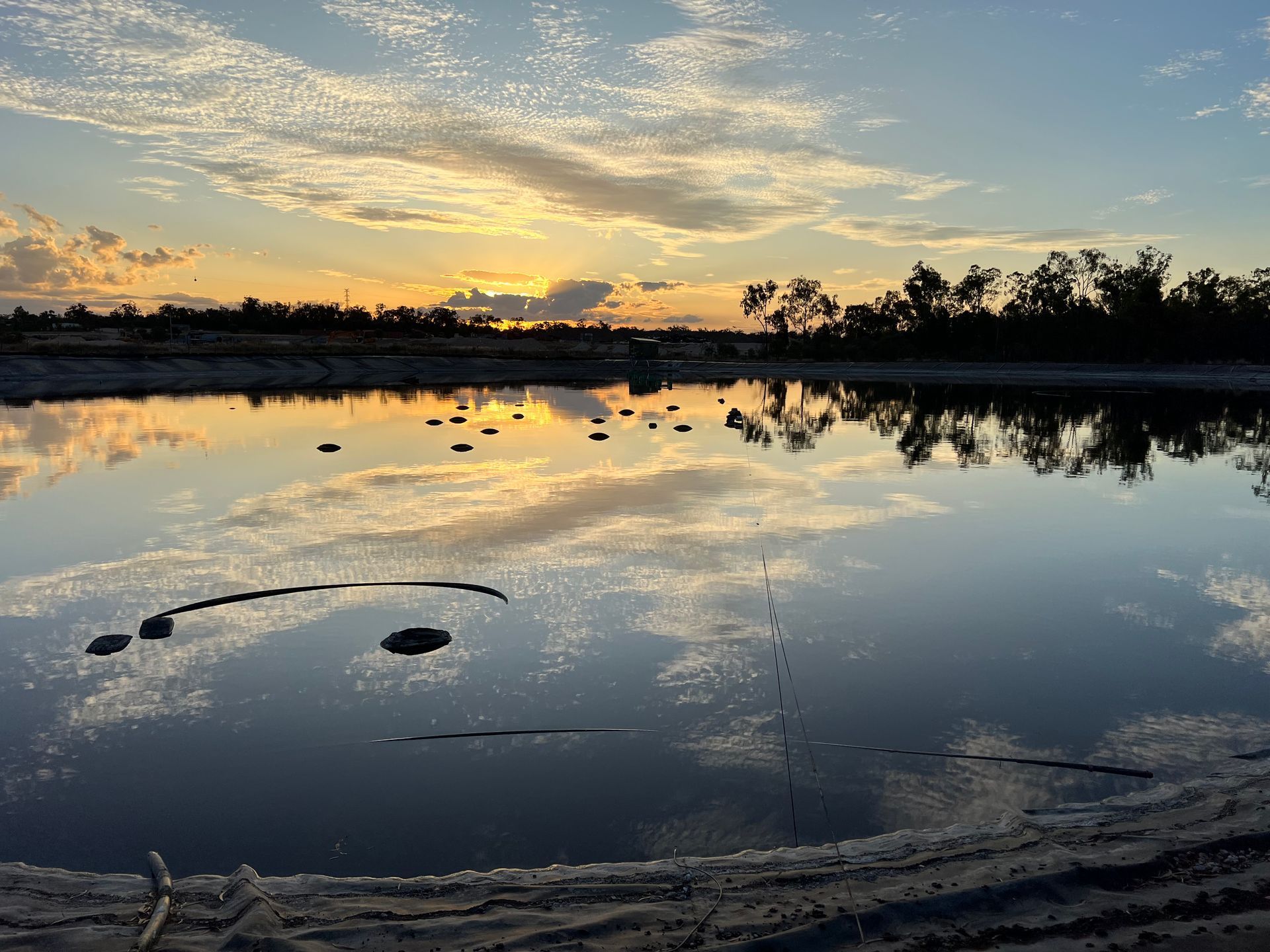
We regularly see sites assume that because they hold approval for an ERA, they can undertake anything that falls within that ERA. That’s not how Environmental Authorities work. An EA does not approve the full scope of what an ERA could include. It approves what you applied for — including the way the activity is undertaken, the infrastructure used, the controls you committed to and the scale and intensity you described. Sometimes, there are some obvious limitations set by your EA per ERA. For example, you may hold ERA 54 Mechanical Waste Processing, Threshold 2 (general waste), therefore, if you want to take regulated waste, you know that you aren't licenced to do so, as it is Threshold 3 & 4. It's the more subtle changes where things can come unstuck, particularly in the waste management ERA space. What Your EA Actually Covers When your EA is granted, it is based on a specific proposal. That proposal includes: The activity itself Where it will occur What materials or wastes are involved How it will be undertaken What controls are in place to manage environmental risk That combination forms the risk profile that was assessed and approved. It is not a blanket approval for all variations of that activity/ERA. Where Sites Get Caught Out Most non-compliances in this space are not deliberate. They come from operational changes that seem minor at the time: Moving an activity to a more convenient location Scaling up volumes Changing inputs slightly Adjusting how something is managed day-to-day Individually, these can seem insignificant. But from a regulatory perspective, they can fundamentally change the risk to environmental values — which means they fall outside what was originally approved. Example 1 – Crushing Concrete under ERA 54 You are approved to undertake crushing concrete under ERA 54. What was approved: Crushing within an enclosed building Dust suppression sprays on the machine Settled dust wet cleaned within bunded area, and vac truck removed offsite to be disposed at facility that is licenced to accept it You now want to undertake crushing outdoors. It’s still crushing — so it feels like it should be fine. But the risk profile is no longer the same: Dust is no longer contained and can travel offsite Fine material can be mobilised into stormwater Noise is no longer attenuated by the building (for offsite sensitive receptors/neighbours) Wind becomes a factor The original approval was based on a controlled system. Moving outdoors changes how emissions behave and where they end up. Example 2 – Wastewater Reprocessing under ERA 55 You are approved to receive and reprocess wastewater in ponds. What was approved: A purpose-built pond with engineering design Construction Quality Assurance (CQA) completed Leak detection system installed Groundwater monitoring bores in place Defined and assessed allowable inputs You now want to construct another pond, or accept a slightly different input. Again, this appears similar. But, because you think you are already approved for this activity, you aren't putting together an EA application which steps through all the requirements, and therefore, some aspects get missed: If the new pond is missing any of those design or verification elements, seepage risk increases Without monitoring or leak detection, early warning systems are lost Different inputs may behave differently in storage or treatment (for example, odour risk) The original assessment of contaminants and volumes may no longer apply Even if the pond looks the same, the certainty of performance and level of risk is not the same. Example 3 – Other Activities under ERA 55 You are the same site as Example 2, already approved under ERA 55 to receive and reprocess wastewater in ponds. You now want to treat contaminated soils using stabilisation (e.g. lime dosing). It’s still ERA 55 — so it feels like you should be covered. But let's think about what was approved: Treatment of liquid waste in lined ponds Risks primarily related to odour, pond failure, seepage and groundwater What changes: Dust generation from handling soils Airborne contaminants and exposure pathway To be undertaken in an unlined, unbunded area Stormwater contamination from open treatment areas Land contamination risks Potential for offsite reuse (if uncontrolled, contamination of other sites) Same ERA — completely different risk. The original EA for wastewater ponds does not consider these impacts, so the new activity has not been approved. Why “Almost the Same” Isn’t the Same A key point that is often missed is this: Environmental risk is driven by more than just the activity itself. It is driven by: How emissions are generated How they are controlled The pathways they can travel The receptors they can reach Small changes to any of these can significantly change the outcome. Two activities that look identical operationally can have very different impacts once you consider odour, dust, surface water, noise, or groundwater pathways. When Do You Need an EA Amendment? As a general rule: Assume an EA Amendment is required. Request a pre-lodgement meeting, be clear about the change you are thinking of, and take guidance from the assessing officers. This is not a space for “we’ll just make the change and see how it goes”. Why It Matters Operating outside the scope of your EA is not just a paperwork issue. It can result in: Non-compliance with conditions Environmental harm or nuisance Regulatory action Be issued a stop works notice, essentially cutting off your source of income Costly and time-consuming remediation or retrospective approvals We often see sites end up in a far more difficult position trying to justify a change after the fact, rather than assessing it properly upfront. In Closing Your EA is not an approval for everything that falls under the ERA listed on your licence. It is approval for what you applied for — a specific activity, undertaken in a specific way, with specific controls. If those things change, your approval may no longer apply. That’s why the detail in your original EA application — and any amendments — matters. What you describe is what gets assessed, and ultimately, is what you are approved to do. If your operations are evolving, don’t assume you’re covered. Stop, assess the risk, and confirm whether an amendment is required. Give us a call to discuss your waste-related activities — whether it’s an original EA application or an amendment. Last updated 29 March 2026. This information is general in nature, may not be current, and may not be applicable to your specific circumstances. It should not be used as a substitute for site-specific professional advice.
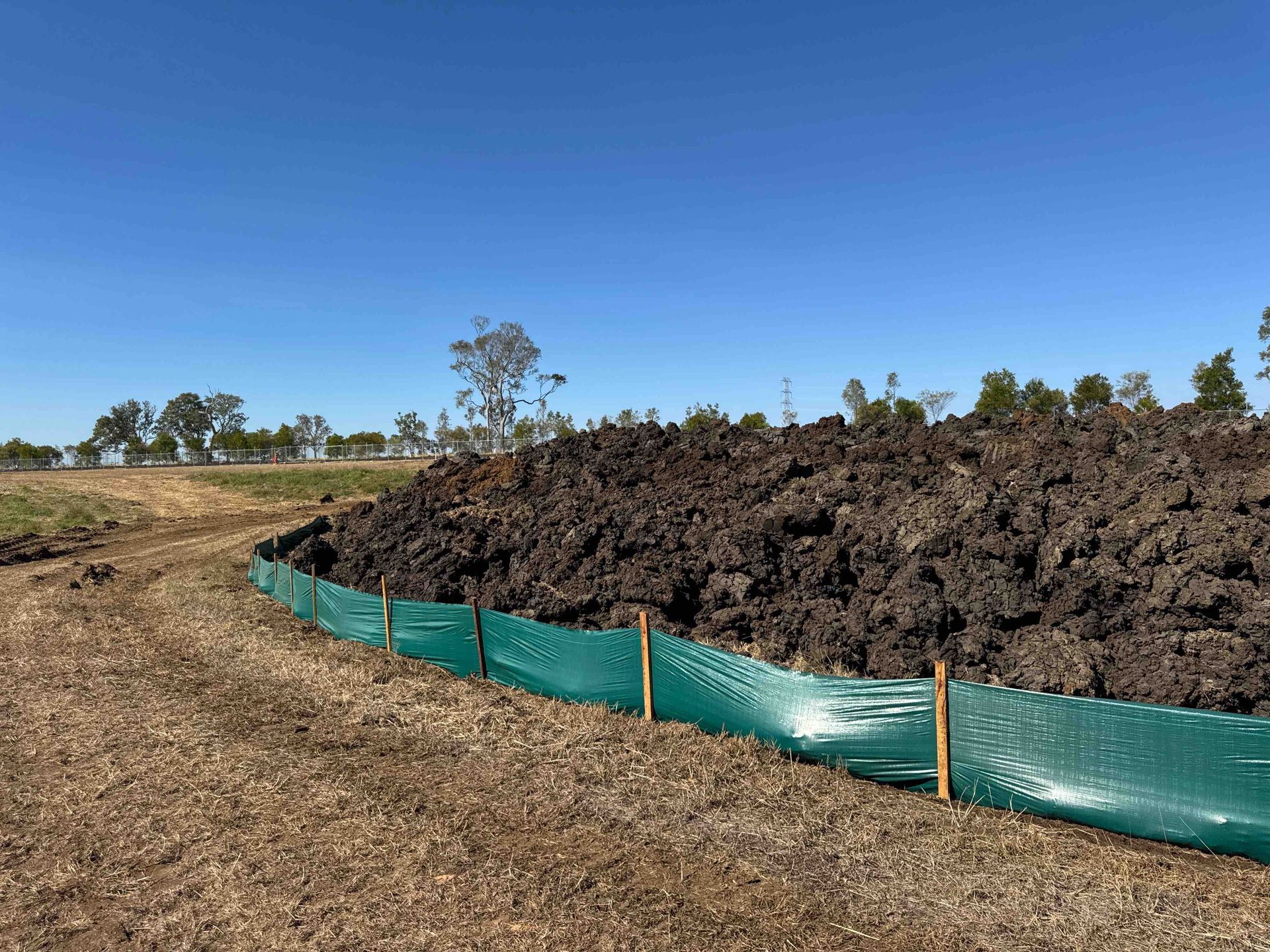
When is it a resource? When is it a waste? And what do you actually need to do?
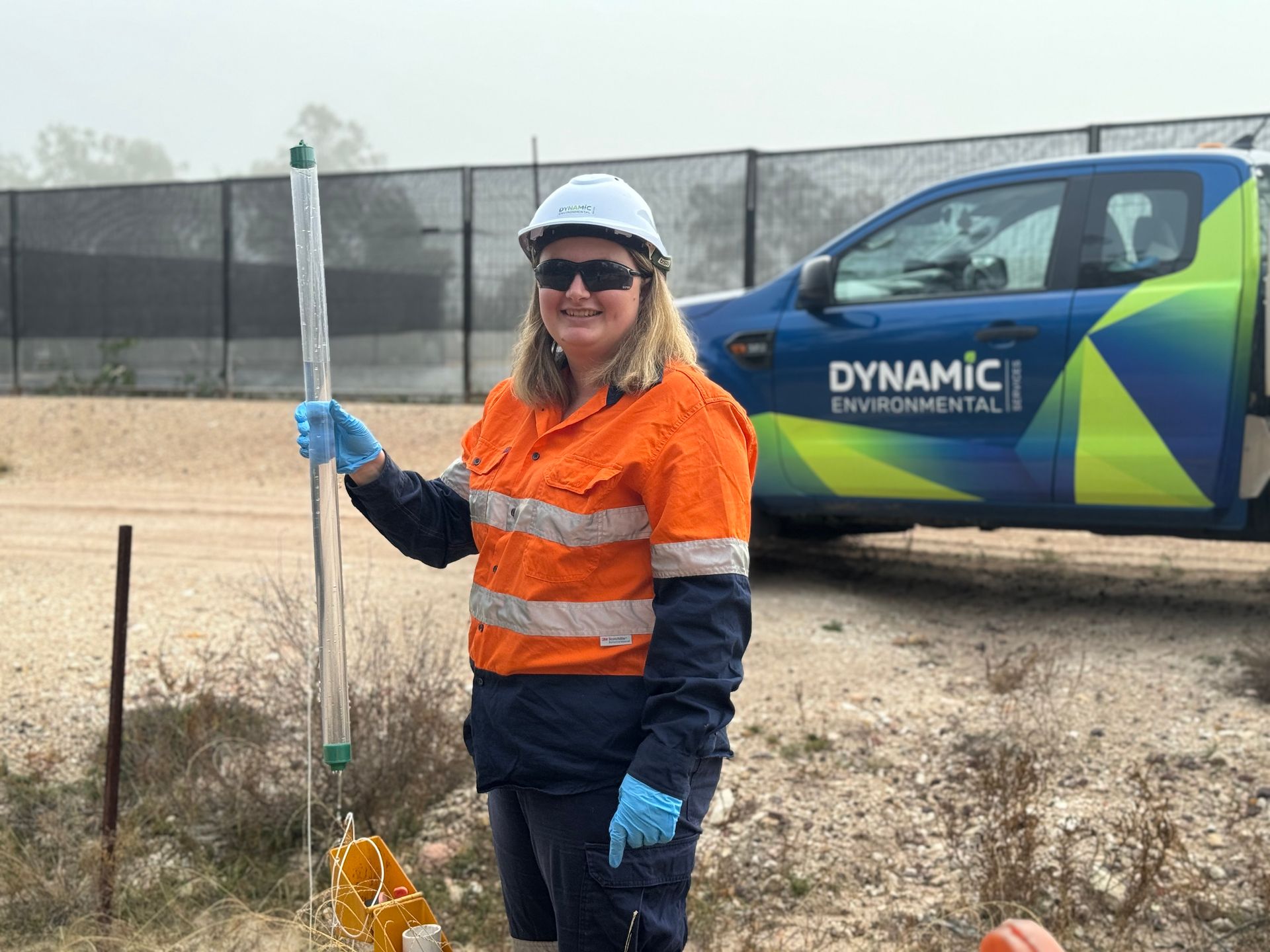
Hypothetical Situation: A site’s Environmental Authority lists a number of groundwater bores, and states that they must be monitored for certain parameters 6 monthly. The EA has another condition which states that a groundwater review must be undertaken every 3 years by an appropriately experienced person (hydrogeologist). The site diligently samples the groundwater bores, and collates the field and laboratory results into a spreadsheet. However, those results are not reviewed when they are received… because the EA says that a groundwater review must be undertaken every 3 years, with no other specific review obligations. Given groundwater monitoring is intended as a warning system for contamination, is only reviewing the groundwater results every 3 years adequate to meet the General Environmental Duty of the Environmental Protection Act? Or a general EA condition such as the requirement to take all reasonable and practicable measure to prevent or minimise the likelihood of environmental harm being caused by the activities? When a dam containing hazardous waste is found to be leaking (found upon visual inspection), and subsequently the previous two years of groundwater data are reviewed and found to indicate this has been occurring prior to the visible leak being detected, it is likely this will not be looked upon favourably in a prosecution. “But it wasn’t time for our 3 yearly review!” is unlikely to be acceptable to the Regulator. Perhaps the EA has another condition which states that deterioration of groundwater quality must be reported to the Regulator within 14 days of receipt of the results. If data is only reviewed every 3 years, how is this condition being met? Perhaps the EA has a condition that requires the development and implementation of a Groundwater Monitoring Plan. It is suggested an adequate Groundwater Monitoring Plan should include guidance on interpretation of results, not just what, when and where to monitor. In our opinion, a Groundwater Monitoring Plan without interpretation guidance is defective and non-compliant with the intent of the condition. And if it does have guidance, is this clear enough to be accurately and swiftly executed by site personnel? We see many shortcomings in groundwater monitoring. Some of the most common and most significant include: · Data that clearly demonstrates potential environmental harm, which has not been noticed or investigated. There are some really easy ones in this space – your groundwater should not have PFAS in it! If it does, you either have identified contamination of the aquifer or contamination of your samples by your sampling methodology or the laboratory. Regardless, this should be promptly investigated. · Sites not being aware which of their bores is a leak detection bore and which are aquifer monitoring bores. One should be dry and the second should not be dry, and if this is not the case, this needs investigating. · Sites not having modelled groundwater flow direction to determine what is an upgradient (background) monitoring bore, and what is downgradient (identification) monitoring bore, and therefore not being able to interpret results adequately. · Not monitoring water quality in ponds that have the potential to leak, and therefore being unaware of the potential contaminants that would indicate seepage into the aquifer from the pond. Groundwater monitoring can be a highly effective detection system of potential environmental harm, but only if it is undertaken well, by persons with a comprehensive understanding of monitoring well construction, groundwater and contaminants, and with an adequate system of bores in place. Last updated 19 November 2024. This information is general in nature, may not be current, and may not be applicable to your specific circumstances. It should not be used as a substitute for site-specific professional advice.